Shipyards: Drydock Creative Hubs
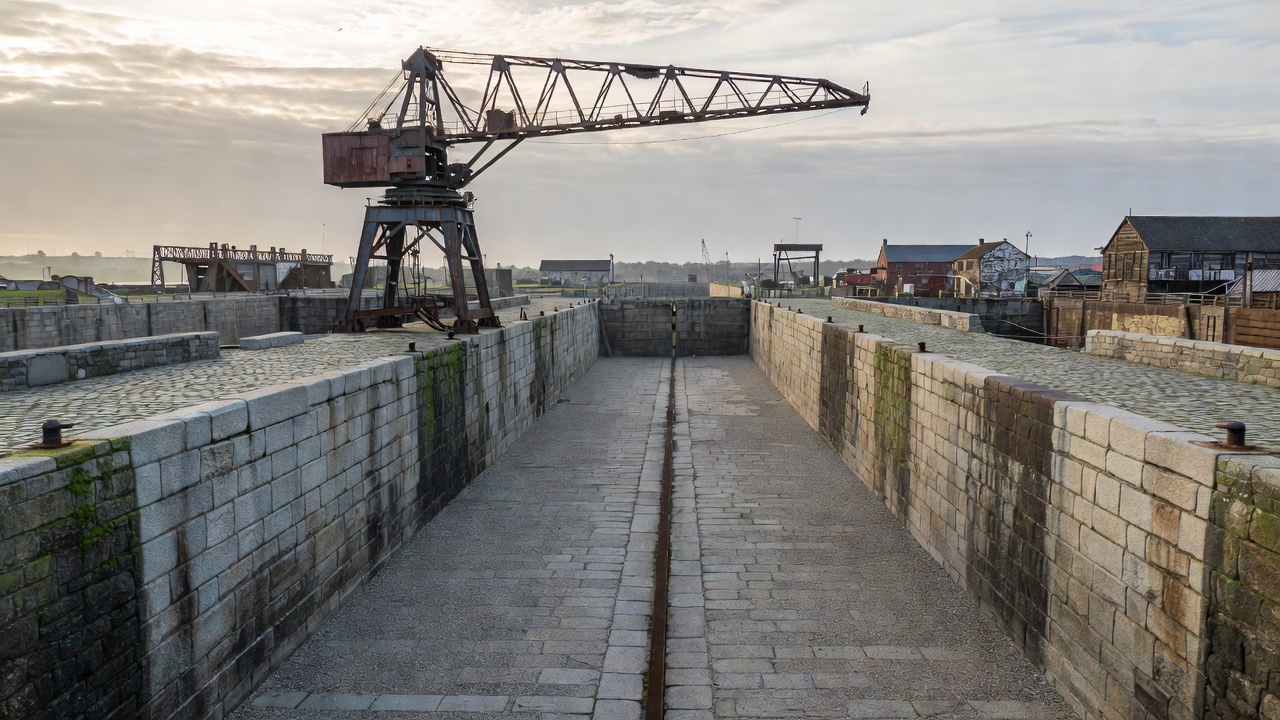
For centuries, the edge condition between land and ocean was defined by heavy shipyards: vast stone graving docks, timber slipways, and overhead gantry cranes engineered to withstand the gravitational loads of supertankers and dreadnoughts. As cargo containerization moved modern maritime shipping to offshore deepwater terminals, inner-city docklands became desolate post-industrial voids.
NDSM Wharf Amsterdam: Grassroots Artistic Colonization
The Nederlandsche Dok en Scheepsbouw Maatschappij (NDSM) in Amsterdam-Noord was once one of the largest shipbuilding yards on earth. Following bankruptcy in the mid-1980s, its monumental shipbuilding shed—a single interior volume spanning roughly 20,000 square meters—fell vacant.
Rather than commissioning luxury condominium high-rises, the municipal authorities partnered with independent artist cooperatives. The shed was partitioned into the Kunststad (Art City), a multistory interior labyrinth constructed from shipping containers and timber mezzanines. Today, sculptors, metalworkers, printmakers, and festival organizers occupy the hall, while the outdoor slipways host international skate parks, open-air flea markets, and contemporary craft breweries.
The Titan Crane of Clydebank
On the River Clyde in Scotland, the John Brown & Company shipyard forged iconic liners like the RMS Queen Mary and Queen Elizabeth 2. The centerpiece of this yard was the Titan Crane, a 150-foot-tall cantilever crane erected in 1907 capable of lifting 150-ton boilers into ship hulls.
When the shipyard closed, the Titan was recognized as a Category A listed monument of international naval importance. Following a £3.75 million restoration, the crane was fitted with a glass passenger elevator, illuminating LED night beacons, and a viewing platform that allows visitors to gaze down onto the historic Clyde shipping channel from dizzying heights.
Navigating Estuary Tides and Geotechnical Salt Corrosion
The preservation of maritime heritage sites introduces biological challenges unseen in landlocked steelworks. Constant exposure to brackish water, sea salt aerosols, and aggressive estuary winds rapidly degrades unprotected steel rivet joints and mortar in historic masonry drydocks.
Engineers maintain active drainage pumps in drydocks to prevent stagnant algal build-up, and replace corroded steel balustrades with marine-grade stainless hardware or composite weathering timber that echoes the historic boat-building craft of the site.