Mining: Subterranean Galleries
Below the surface of industrial civilizations lies an unseen parallel continent: hundreds of thousands of kilometers of haulage tunnels, ventilation shafts, and extraction chambers excavated over centuries. Deep-pit coal mines and geological rock-salt deposits powered thermal generators and sustained national economies. Today, a selected group of these subterranean worlds has been meticulously stabilized for public descent.
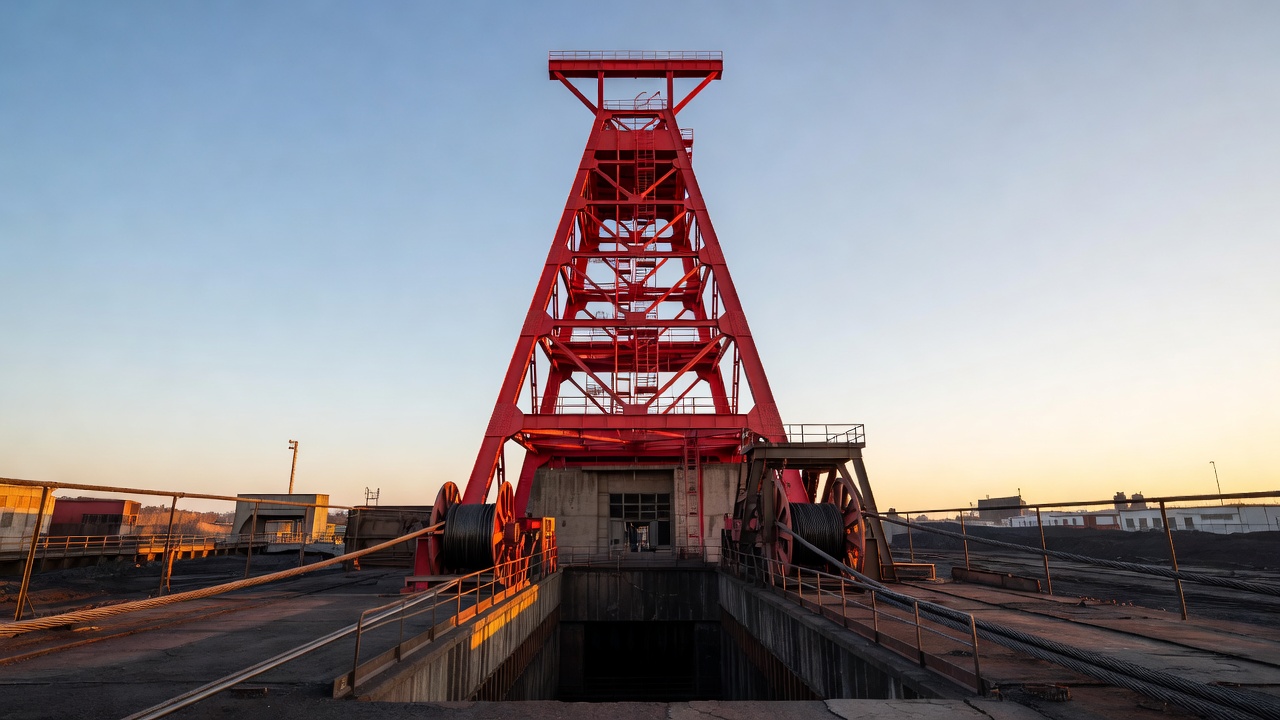
Zollverein Coal Mine: The Bauhaus Cathedral of Labor
Designated a UNESCO World Heritage site in 2001, the Zollverein XII Colliery in Essen, Germany, stands as the crowning achievement of functionalist industrial architecture. Designed by Bauhaus-influenced architects Fritz Schupp and Martin Kremmer in 1932, the surface buildings present symmetrical cubic volumes clad in dark red steel framework and brickwork.
Zollverein handled up to 12,000 tons of hard coal daily. Following its decommission, the complex became the central monument of the Ruhr Museum and the Red Dot Design Museum. The former coal-washing plant houses permanent exhibits reached by an illuminated 24-meter external escalator, while the coking plant features a water channel converted into an outdoor winter ice skating rink flanked by cooling towers.
Wieliczka and Bochnia: Salt Cathedrals of Southern Poland
Operating continuously since the 13th century until recent commercial cessation, the Wieliczka Salt Mine descends to a depth of 327 meters across nine levels. Rather than raw industrial darkness, miners over seven centuries sculpted rock-salt into a sacred subterranean palace:
- Chapel of St. Kinga: An underground sanctuary 101 meters beneath the earth, featuring intricate altar carvings and crystal chandeliers fashioned entirely from transparent rock-salt.
- Subterranean Brine Lakes: Chambers filled with heavy saline water illuminated with dynamic musical compositions that echo off natural salt vaults.
- Subterranean Microclimate Sanatoriums: The naturally sterile, allergen-free air deep in the salt chambers is used therapeutically for visitors with respiratory illnesses.
Life Support and Geomechanical Monitoring
Preserving deep underground mines for tourism requires constant, automated geotechnical vigilance. Unlike surface buildings, subterranean voids face immense lithostatic pressure from overlying rock strata. Convergence gauges measure millimetric movements in tunnel walls, while giant ventilation fans continuously circulate fresh surface air to prevent the accumulation of radon or methane gases.