Smelters: From Blast Furnace to Park
The iron blast furnace is among the most aggressive, thermal, and structurally imposing machines ever conceived by industrial civilization. Continuous chemical reduction of iron ore requires an uninterrupted column of incandescent coke, limestone flux, and superheated air blasts reaching temperatures exceeding 1,600°C. When market consolidation, environmental mandates, and globalization shuttered these vast smelting complexes across Europe and North America during the late 20th century, common wisdom urged explosive demolition.
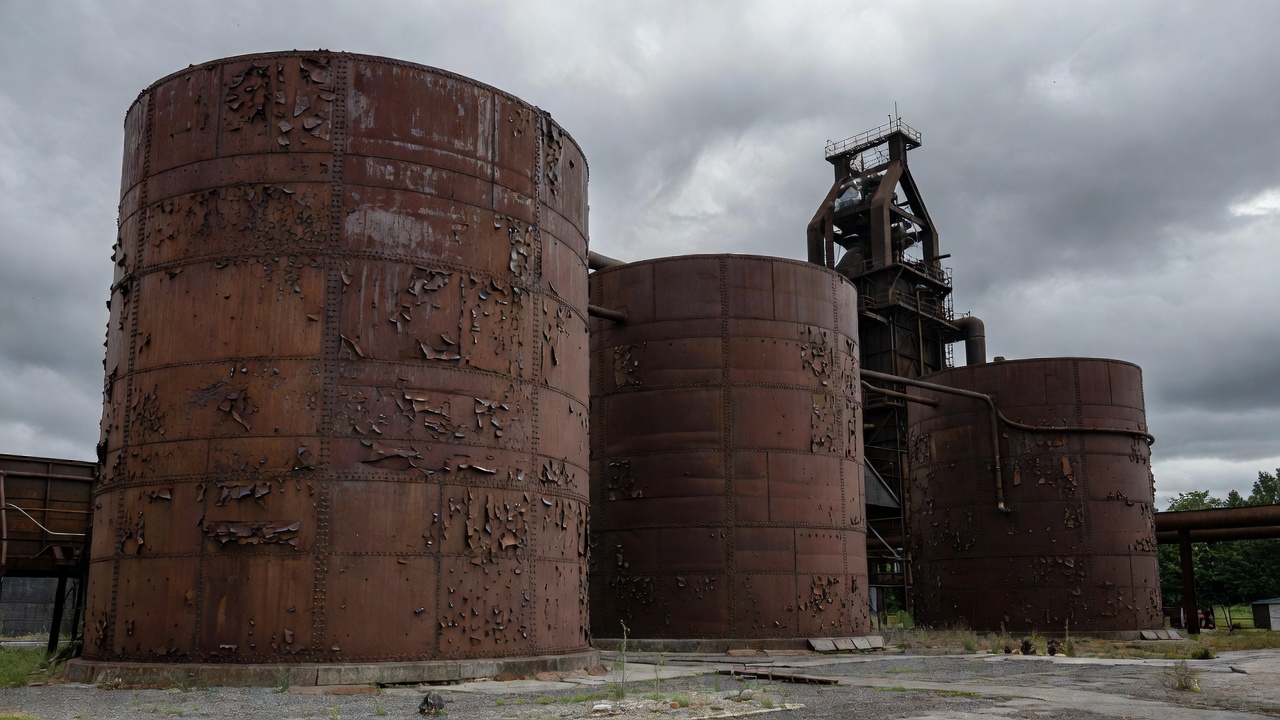
The Paradigm Shift of Peter Latz and IBA Emscher Park
In Germany's Ruhr district, the closure of the Thyssen ironworks at Duisburg-Meiderich in 1985 ignited a visionary debate. Landscape architect Peter Latz rejected the conventional notion that an obsolete factory must either be cleared for anonymous commercial suburban estates or sanitized into a manicured golf-course lawn. Instead, Latz pioneered the Latz + Partner philosophy of acknowledging memory: retaining the titanic steel towers, blast stoves, and concrete sintering bunkers as ruins of immense cultural consequence.
Rather than attempting to erase the chemical legacy of the ground, contaminated soils were encapsulated within concrete ore bunkers, and spontaneous flora was allowed to colonize barren slag heaps. The result was Landschaftspark Duisburg-Nord, now heralded internationally as the masterwork of post-industrial landscape architecture.
Functional Reimagining of Blast Furnace Infrastructure
- Gasometer as Subterranean Diving Center: The massive circular container previously holding blast-furnace gas was flooded with 20,000 cubic meters of filtered water. It now functions as Europe’s largest artificial indoor diving center, complete with an artificial reef, a sunken yacht, and submerged training obstacles.
- Ore Storage Bunkers as Alpine High-Ropes Terrains: The sheer vertical concrete canyon walls of the former ore bunkers were fitted with bolted climbing anchors and carabiner stations by the German Alpine Club (DAV), creating a world-class training crag within a metropolitan setting.
- Blast Furnace No. 5 as an Observation Belvidere: Visitors ascend external iron staircases and catwalks to the 70-meter summit of Blast Furnace 5, obtaining a 360-degree panorama of the revitalized Ruhr Valley landscape.
- Casting House as Open-Air Theater: The sand-floor tapping area where molten pig iron once flowed into runners is converted into a sheltered amphitheater hosting international cinema festivals and symphonies.
Structural Stabilization without Erasing Time
A continuous challenge for preserving ferrous smelting ruins is structural oxidization. While rust coats steel in a striking amber-bronze tone, uncontrolled interior water ingress can rot load-bearing riveted junctions. Conservators employ targeted polyurethane injections, drainage routing through historic conduit lines, and cathodic rust prevention to ensure that public catwalks remain safe without sandblasting away the dark, atmospheric patina of 80 years of smelting history.
Today, similar strategies are being executed globally: the Carrie Furnaces in Pittsburgh offer guided industrial history and graffiti art tours; the steel mill of Fundidora Park in Monterrey, Mexico hosts an interactive technology museum inside its towering furnace shells.